Self respect is the all American value in that it was elected by the largest number of Americans and it has the least distinctive endorsers. People from all age and income groups selected this value as most important. About 21.1 % of Americans selected it in 1976, 23% in 1986.
Security is a deficit value, endorsed by people who lack economic and psychological security. People who endorse it tend to report anxiety, trouble sleeping, dizziness, and shortness of breath. In terms of media preferences they like 20 / 20 and Love Boat by 20.6% of Americans in 1976, 16.5% in 1986.
Warm relationships with others is an excess value, endorsed by people especially women, who have a lot of friends and who are friendly. Midwesterners rate this value highly. Endorsers include divorced men, Lutherans, frequent churchgoers, housewives and clerical workers. People here experience nightmares but have good social support networks and families. The percentage has risen from 16.2% to 19.9%.
Likewise people who endorse sense of accomplishment have accomplished a lot. These people tend to be successful middle aged man. They often have good jobs and high incomes. They tend to be well educated managers and professionals. They may be Jewish or Methodist, but they often do not go to synagogue or church. These people like conspicuous consumption but dislike any television watching that interferes with accomplishment, especially Love boat and Three’s Company. About 11.4% endorsed this value earlier, but more recently endorsement grew to 15.9%. The percentage is higher in the northeast.
People mostly young urban professionals — who endorse self-fulfillment are relatively well fulfilled economically, educationally, and emotionally. They are healthy and self confident. They resent excessive demands from their families that distract from self fulfillment. They like movies more than television. Overall 9.6% of Americans subscribed to this value earlier, but the rate fell more recently to 6.5%. The percentage is higher in the Pacific states.
Being well respected is selected by the Rodney Danger fields of the world. They are often over 50 and have little occupational prestige, yet they love their jobs. This value is endorsed by farmers, craftsmen, operators, divorced women, and retired people. They have low income and lack formal education. It is interesting to contrast self respect which one can achieve alone, with being well respected which requires the cooperation of others. People who values self respect are much better adjusted, according to our measures. Psychologically people who value being well respected tend to be external depressed unhappy, pessimistic and unhealthy. For fun they like to bowl The 1976 and 1986 percentages are, respectively, 8.8% and 5.9%.
Sense of belonging also requires the help of others. Like warm relationships with others, it is a social value selected by women. However, it is less reciprocal and seems to result in greater dependency. It is a home and family oriented value particularly popular in the mountain states. Endorsers tend to be housewives and clerical workers. Although they tend to have only a high school education they tend to be middle income. They are happy in family roles, although physically they experience dizziness, anxiety, nervousness and headaches. They go to church weekly, usually as Presbyterians, Lutherans, or Catholics. They like to read TV Guide and Reader’s Digest. The endorsement rate was 7.9% and has fallen to 5.1%.
You might think that fun and enjoyment in life would isolate the hedonists in America but the cliché that best describes these people is Stop and smell the roses . Young people who appreciate life especially like this value. They are often unemployed or work in sales or labor, but they are optimistic and well adjusted. They dislike family roles, religion and children however. They do like sports and entertainments and they read Playboy, rolling stone and Cosmopolitan. About 4.5% of Americans endorsed this value in 1976, and the percentage has risen to 7.2%. The rise has been especially dramatic among young males.
Showing posts with label Wisdom. Show all posts
Showing posts with label Wisdom. Show all posts
Saturday, December 12, 2009


Thursday, November 26, 2009
Action...Fight...Wake up...
I see all this potential, and I see it squandered. God damn it, an entire generation pumping gas, waiting tables – slaves with white collars. Advertising has us chasing cars and clothes, working jobs we hate so we can buy shit we don't need. We're the middle children of history, man. No purpose or place. We have no Great War. No Great Depression. Our great war is a spiritual war. Our great depression is our lives. We've all been raised on television to believe that one day we'd all be millionaires, and movie gods, and rock stars, but we won't. We're slowly learning that fact. And we're very, very pissed off.
You're not your job. You're not how much money you have in the bank. You're not the car you drive. You're not the contents of your wallet. You're not your fucking khakis. We are the all-singing, all-dancing crap of the world.
You're not your job. You're not how much money you have in the bank. You're not the car you drive. You're not the contents of your wallet. You're not your fucking khakis. We are the all-singing, all-dancing crap of the world.
- You are not special. You are not a beautiful or unique snowflake. You are the same decaying organic matter as everything else.
- The first soap was made from the ashes of heroes, like the first monkey shot into space. Without pain, without sacrifice, we would have nothing.
- Stop trying to control everything and just let go.
Saturday, November 14, 2009
Time - Tic Tic Tic......
Time - it is the one thing that we are all running out of. It cannot be replaced. When it is spent, it is spent.
What, then, are you doing to ensure that you are maximizing the use of time?"
Understand that time will pass regardless of whether you spend it wisely or simply waste it.
You can make time your friend or it can be your worst enemy. Most people leave important tasks till the last possible moment then they are forced by self-imposed circumstance to rush everything. This is a lack of planning and responsibility , often borne from that other scourge called procrastination - the inability to begin.
Leaving things until the "eleventh hour" is where that horrible word "URGENT" comes from. Whenever you hear that word you can almost certainly be sure that somebody in the chain is trying to deflect the blame onto somebody else for their own slackness. You don't do that do you?
How many times have you heard people complain that they "haven't had time!"? What they really mean, and what they should be saying, is "I left it too late and ran out of time." Ever hear anybody say that? Uh-uh - that sounds too self-deprecating doesn't it? So they blame time itself.
Time does not care how you spend it. You can use it to create marvelous things in your life or you can waste it. All of us have only 168 hours per week. About a third of that is spent re-charging, that is, sleeping. That leaves 112 hours to use - more than enough to achieve anything you want.
I have a saying about sleep. "You can sleep all you want when you are dead." In the meantime, if you have something really important to do then get up an hour earlier in the morning. Conversely, if you are a "night person" you can stay awake for several hours in the evening to get things done.
The wise use of time is the mark of a successful person.
Plan your actions. Use time wisely - you are never going to get it back. The clock is always ticking. Tick. Tick. Tick...
What, then, are you doing to ensure that you are maximizing the use of time?"
Understand that time will pass regardless of whether you spend it wisely or simply waste it.
You can make time your friend or it can be your worst enemy. Most people leave important tasks till the last possible moment then they are forced by self-imposed circumstance to rush everything. This is a lack of planning and responsibility , often borne from that other scourge called procrastination - the inability to begin.
Leaving things until the "eleventh hour" is where that horrible word "URGENT" comes from. Whenever you hear that word you can almost certainly be sure that somebody in the chain is trying to deflect the blame onto somebody else for their own slackness. You don't do that do you?
How many times have you heard people complain that they "haven't had time!"? What they really mean, and what they should be saying, is "I left it too late and ran out of time." Ever hear anybody say that? Uh-uh - that sounds too self-deprecating doesn't it? So they blame time itself.
Time does not care how you spend it. You can use it to create marvelous things in your life or you can waste it. All of us have only 168 hours per week. About a third of that is spent re-charging, that is, sleeping. That leaves 112 hours to use - more than enough to achieve anything you want.
I have a saying about sleep. "You can sleep all you want when you are dead." In the meantime, if you have something really important to do then get up an hour earlier in the morning. Conversely, if you are a "night person" you can stay awake for several hours in the evening to get things done.
The wise use of time is the mark of a successful person.
Plan your actions. Use time wisely - you are never going to get it back. The clock is always ticking. Tick. Tick. Tick...
Sunday, November 1, 2009
Avoid getting distracted
To cut yourself off, get a pair of headphones that block out noise. Your colleagues will get the message that you do not wish to be disturbed(Somehow I need more oxygen then others, need more space for myself but people around u are always good lechers; they will suck your blood till death).
Diwali is the time for festivities. There always is a lot to do from planning parties to making time for shopping during lunch hours. Losing focus of work is inevitable. Here are some tips to avoid getting distracted by the Diwali festivities:
Everyone at the office either wants or is expected to contribute in some way or the other towards the festive preparations. At the same time, your boss won’t want your productivity to get affected. It’s best to schedule a time for those brainstorming sessions that involve decisions like theme of decorating the office, lunch menu for Diwali party etc. If everyone agrees to come in early for such meetings, it is easy to get this off your agenda and concentrate on work for the rest of the day.
If you are responsible for scoring any of the requirements for Diwali, don’t waste time going through Yellow Pages and looking for vendors. Use the Internet to find vendors, draft a common e-mail and shoot it off to them asking for quotations to be either emailed or faxed back. This way you can go through the quotations when you are free instead of answering or making phone calls in the midst of an assignment.
The first rule of time management and avoiding distractions – any work that can be handled by someone else should be delegated. Break up the task assigned to you for the Diwali run up into smaller steps. If any of these chores be handled by your secretary or colleagues request them to do so. This makes it easier to keep your work and Diwali schedule on track.
The one time when you aren’t likely to get frowns from the boss for focusing on Diwali preparations is when you use some time of your lunch hour. This could also be perfect for having impromptu, meetings on the subject. In fact, it could just brighten up your lunch hour and then have you in good spirits to focus on work.
There will always be a buzz about Diwali preparations around the office. It may be difficult not to get drawn into a conversation with colleagues in the next cubicle. The best way is to completely cut your self off – get a pair of headphones that block out noise. Your colleagues will get the message that you do not wish to be disturbed and if they don’t, hang a “Do Not Disturb” sign on your chair.
Above all, one needs to have the right mental attitude – festivals are fun, but being a responsible adult means that you know how to draw the line between fun and work.
The above is one conservative thought. Office Diwali celebrations are brief with a Puja and may not require any executive time. There are people like Attendants and contract cleaning staff under the supervision of Administrative department or Union leaders in case of Factories. First of all in an office environment there will not be any noise because holidays for the festival are declared. So such gadgets like headphones may not be required. Even if somebody wears them with a good intention the boss can think that you are listening to Music during working hours.
Effective Time management is required on all working days. Enjoy festival holidays with family and forget the work at that time. Once back to office deliver your tasks. Keep aside the conservative advises and thoughts.
This is an experience i just had and believe me you really need to prioritize your work accordingly. Don' speak for the results let the results speak for you.....
Diwali is the time for festivities. There always is a lot to do from planning parties to making time for shopping during lunch hours. Losing focus of work is inevitable. Here are some tips to avoid getting distracted by the Diwali festivities:
Everyone at the office either wants or is expected to contribute in some way or the other towards the festive preparations. At the same time, your boss won’t want your productivity to get affected. It’s best to schedule a time for those brainstorming sessions that involve decisions like theme of decorating the office, lunch menu for Diwali party etc. If everyone agrees to come in early for such meetings, it is easy to get this off your agenda and concentrate on work for the rest of the day.
If you are responsible for scoring any of the requirements for Diwali, don’t waste time going through Yellow Pages and looking for vendors. Use the Internet to find vendors, draft a common e-mail and shoot it off to them asking for quotations to be either emailed or faxed back. This way you can go through the quotations when you are free instead of answering or making phone calls in the midst of an assignment.
The first rule of time management and avoiding distractions – any work that can be handled by someone else should be delegated. Break up the task assigned to you for the Diwali run up into smaller steps. If any of these chores be handled by your secretary or colleagues request them to do so. This makes it easier to keep your work and Diwali schedule on track.
The one time when you aren’t likely to get frowns from the boss for focusing on Diwali preparations is when you use some time of your lunch hour. This could also be perfect for having impromptu, meetings on the subject. In fact, it could just brighten up your lunch hour and then have you in good spirits to focus on work.
There will always be a buzz about Diwali preparations around the office. It may be difficult not to get drawn into a conversation with colleagues in the next cubicle. The best way is to completely cut your self off – get a pair of headphones that block out noise. Your colleagues will get the message that you do not wish to be disturbed and if they don’t, hang a “Do Not Disturb” sign on your chair.
Above all, one needs to have the right mental attitude – festivals are fun, but being a responsible adult means that you know how to draw the line between fun and work.
The above is one conservative thought. Office Diwali celebrations are brief with a Puja and may not require any executive time. There are people like Attendants and contract cleaning staff under the supervision of Administrative department or Union leaders in case of Factories. First of all in an office environment there will not be any noise because holidays for the festival are declared. So such gadgets like headphones may not be required. Even if somebody wears them with a good intention the boss can think that you are listening to Music during working hours.
Effective Time management is required on all working days. Enjoy festival holidays with family and forget the work at that time. Once back to office deliver your tasks. Keep aside the conservative advises and thoughts.
This is an experience i just had and believe me you really need to prioritize your work accordingly. Don' speak for the results let the results speak for you.....
Friday, September 18, 2009
Think and take ACTION
How long we should wait for red to turn into green, why are we not standing up all together to fight with this situation.
Topic : Transport
Subject: How can we improve this!!!
Tag Line:WE MUST FIGHT FOR PUBLIC TRANSPORT. NEVER SHY AWAY FROM IT
Solution: Use bus as a solution to traffic
BMTC has just 5000 buses, and carries 37 lakh people every day.
Bangalore's 32 lakh cars and two-wheelers carry 32 lakh people.
By G V Dasarathi
14 Sep 2009,
(Read again !!!!)
During commute time in Bangalore when people are traveling to their offices, how many people do you see:
1. In a car?
2. On a motor bike?
3. In a bus?
Answer : 1 in a car, 1 on a bike, 75 in a bus.

Here’s a small transportation engineering exercise.
If you count the number of vehicles on the flyover in the picture below, you’ll find that they add up to 150. Assuming the people in these vehicles are all going to or from work, each of the vehicles is carrying 1 person.
That means there are 150 people between the two red lines.
Lets now divide these 150 vehicles into two groups of 75 vehicles each.

If each of these groups of people decide to travel by bus instead of in their cars and two-wheelers, this is what happens (remember, we already decided that the average bus carries 75 people during rush hour).

The congestion magically disappears !
This is no magic. It is proven every day on Bangalore's roads by BMTC.
BMTC has just 5000 buses, and carries 37 Lakh people every day.
Bangalore's 32 lakh cars and two-wheelers carry 32 lakh people.
This means that 0.15 per cent of the vehicle population is carrying 50 per cent of the human population.
To carry a person 1 km, a bus:
1. Uses 1/30th the space of a car, and 1/20th the space of a two-wheeler.
2. Emits 1/6th the pollution of a car, and 1/10th that of a two-wheeler
3. Uses 1/15th the quantity of fuel of a car, and 1/3rd that of a two-wheeler
With extensive use of buses this is what can be achieved in Bangalore:
1. Number of vehicles reduced to 1/10th
2. Air pollution 1/6th of what it is now.
3. Traffic density 1/10th of what it is now.
4. Commute time reduced by 1/2
5. Commuting cost reduced to 1/5th.
6. Accidents reduced dramatically.
7. The money that the government spends on road infrastructure will be available for improving water, power, education, medicare and housing.
We don't have to travel uncomfortably, 75 people in a bus. We can have multiple classes of buses, like BMTC already has.
So where is the problem ? Why can't we do this?
Let's hear it from someone who solved the problem in Bogotá, Colombia, which has the same population as Bangalore, in an area twice the size, and had a similar traffic problem.
When Enrique Peñalosa became mayor of Bogotá in 1998, he asked a question that is changing the way people all over the world think about cities: “In Bogotá, where 85 percent of the people do not use cars for their daily transport, is it fair that cars occupy most of the space on the streets?
The city built 70 miles of bicycle routes and closed several streets to cars and converting them into pedestrian malls. Car use was restricted during rush hour, each car banned from the downtown area two days a week, based on the license plate number. The results were dramatic: the average commute time dropped by 21 minutes, and pollution was reduced significantly.
The city had been debating a multi-billion dollar train subway system for decades, but Peñalosa decided to build a rapid transit bus system (BRT) that was far cheaper.
In the words of Peñalosa, who says he succeeded because he focused on improving the lot of people, not their cars. “All over the developing world, resources are used to help the affluent avoid traffic jams rather than mobilizing the entire population,”
People ask him why this is not done everywhere, if it is so simple and inexpensive. “I tell them the only issue is a political one. They don’t want to take space from cars and give it to buses, bicyclists, and pedestrians,”
After Peñalosa showed the way, scores of cities the world over have switched to bus systems.
Think and act wisely !!!
Topic : Transport
Subject: How can we improve this!!!
Tag Line:WE MUST FIGHT FOR PUBLIC TRANSPORT. NEVER SHY AWAY FROM IT
Solution: Use bus as a solution to traffic
BMTC has just 5000 buses, and carries 37 lakh people every day.
Bangalore's 32 lakh cars and two-wheelers carry 32 lakh people.
By G V Dasarathi
14 Sep 2009,
(Read again !!!!)
During commute time in Bangalore when people are traveling to their offices, how many people do you see:
1. In a car?
2. On a motor bike?
3. In a bus?
Answer : 1 in a car, 1 on a bike, 75 in a bus.

Here’s a small transportation engineering exercise.
If you count the number of vehicles on the flyover in the picture below, you’ll find that they add up to 150. Assuming the people in these vehicles are all going to or from work, each of the vehicles is carrying 1 person.
That means there are 150 people between the two red lines.
Lets now divide these 150 vehicles into two groups of 75 vehicles each.

If each of these groups of people decide to travel by bus instead of in their cars and two-wheelers, this is what happens (remember, we already decided that the average bus carries 75 people during rush hour).

The congestion magically disappears !
This is no magic. It is proven every day on Bangalore's roads by BMTC.
BMTC has just 5000 buses, and carries 37 Lakh people every day.
Bangalore's 32 lakh cars and two-wheelers carry 32 lakh people.
This means that 0.15 per cent of the vehicle population is carrying 50 per cent of the human population.
To carry a person 1 km, a bus:
1. Uses 1/30th the space of a car, and 1/20th the space of a two-wheeler.
2. Emits 1/6th the pollution of a car, and 1/10th that of a two-wheeler
3. Uses 1/15th the quantity of fuel of a car, and 1/3rd that of a two-wheeler
With extensive use of buses this is what can be achieved in Bangalore:
1. Number of vehicles reduced to 1/10th
2. Air pollution 1/6th of what it is now.
3. Traffic density 1/10th of what it is now.
4. Commute time reduced by 1/2
5. Commuting cost reduced to 1/5th.
6. Accidents reduced dramatically.
7. The money that the government spends on road infrastructure will be available for improving water, power, education, medicare and housing.
We don't have to travel uncomfortably, 75 people in a bus. We can have multiple classes of buses, like BMTC already has.
So where is the problem ? Why can't we do this?
Let's hear it from someone who solved the problem in Bogotá, Colombia, which has the same population as Bangalore, in an area twice the size, and had a similar traffic problem.
When Enrique Peñalosa became mayor of Bogotá in 1998, he asked a question that is changing the way people all over the world think about cities: “In Bogotá, where 85 percent of the people do not use cars for their daily transport, is it fair that cars occupy most of the space on the streets?
The city built 70 miles of bicycle routes and closed several streets to cars and converting them into pedestrian malls. Car use was restricted during rush hour, each car banned from the downtown area two days a week, based on the license plate number. The results were dramatic: the average commute time dropped by 21 minutes, and pollution was reduced significantly.
The city had been debating a multi-billion dollar train subway system for decades, but Peñalosa decided to build a rapid transit bus system (BRT) that was far cheaper.
In the words of Peñalosa, who says he succeeded because he focused on improving the lot of people, not their cars. “All over the developing world, resources are used to help the affluent avoid traffic jams rather than mobilizing the entire population,”
People ask him why this is not done everywhere, if it is so simple and inexpensive. “I tell them the only issue is a political one. They don’t want to take space from cars and give it to buses, bicyclists, and pedestrians,”
After Peñalosa showed the way, scores of cities the world over have switched to bus systems.
Think and act wisely !!!
Monday, September 7, 2009
Mentors and Mentees
A teacher /or and a student / mentor begin their journey as strangers. But the lessons learnt out of this relationship go beyond just the level of the textbook or business manual, for both involved. After all, learning is a two way process. As we celebrate Teacher’s Day on September 5th, let’s meet a few India Inc, mentors / mentees as they share their learnings derived out of their experience of donning both hats at some point of time in their careers.
Mr.X’s favorite mentors were E A K Faizullabhoy and R K Krishnamurthi; they were his first employers as well. As a mentee, X learnt from that organizations and teams are built on faith and trust. A true balance of trust, human understanding and symbiotic working between different hierarchies in a team is the fundamental premise for successful teams. In one instance, where X had taken a decision to advise a client without their authorization, which turned out to, be a wrong one, they professionally handled the wrong advise, corrected the damage done and ensured that they trained X on similar factual situations. More importantly, they took time out to equip X for similar situations in the future, while discussing the reasons and facts which were wrongly applied by X. X always believed the greatest virtue of a mentor is not only to be superior in knowledge, but also display patience to enable learning and wisdom.
X is now presently mentoring one person in his organization with a view to create a successful career on one hand and to sow the seeds of mentoring on the other. The greatest of the challenges in mentoring is the resistance to change and willingness to unlearn certain preconceived positions of understanding and decision making. Also X is not sure how and when the mentor takes over from being a mere superior in terms of administrative hierarchy.
Now take the case of Y, his mentor was Naren M P executive director of Vaspar Concepts Pvt Ltd. Naren always kept saying that people feel like they have too much to do and not enough time and lack of time is blamed for everything from not getting enough exercise, unachieved goals, bad relationships and so on. Through him, Y learnt ways to compartmentalize time and work and even honed the art of multi tasking.
As a mentor, Y is mentoring three people. In the process of mentoring, Y developed an ability to absorb their experiences which they have acquired through their course of life. Y learnt that every person’s problem is a case study by itself, through them you can enrich your learning.
Now take the case of Z and his mentor was his boss, Kiran Bali. When Z was with GE during 2001-04 it was the time Z transformed his career from technology to leadership. Z’s mentor demonstrated good mentoring skills in shaping me up as a good leader and to see the clear difference in technical leadership. Mentor taught me ways to handle people, give feedback, maintain work life balance in a very demanding job that we are in. To narrate an incident, Z was aggressive by nature and demanded the deadlines from teammates when Z started his career as a project lead. One of the incidents triggered conflict between Z’s colleague and Z, and as Z was the lead, Z stressed the need and asked him to stretch instead of motivating him to do so. Z’s teammate completed the job on time as required but he escalated the issue to Z’s boss. That’s where he stepped in and helped Z learn ways to handle high pressure situations, while still respecting people.
Z is mentoring five people in his current job. Understanding their view is sometimes difficult for which Z needs to step into their shoes to understand the problem before guiding them to the right pointers. Also, mentors gain from a mentee’s experience. Hence, look out for opportunities for improvement on both sides, both mentee and mentor.
M’s best mentor has been his current boss SJ – COO. A few learning sessions M derived from her are: (1) once performance levels of people are established, don’t delay telling people where they stand. In case performance isn’t meeting expectations, they may need you to ensure they know that (2) establish a relationship with people beyond what they do at work and remember the small things about them and (3) the devil is in the detail.
At the moment, M directly would be mentoring four people. M thinks the strongest lesson he has learnt is that you have to let people go and make their own mistakes. Don’t give solutions as much as ask questions that help them to take the decision for themselves.
Mr.X’s favorite mentors were E A K Faizullabhoy and R K Krishnamurthi; they were his first employers as well. As a mentee, X learnt from that organizations and teams are built on faith and trust. A true balance of trust, human understanding and symbiotic working between different hierarchies in a team is the fundamental premise for successful teams. In one instance, where X had taken a decision to advise a client without their authorization, which turned out to, be a wrong one, they professionally handled the wrong advise, corrected the damage done and ensured that they trained X on similar factual situations. More importantly, they took time out to equip X for similar situations in the future, while discussing the reasons and facts which were wrongly applied by X. X always believed the greatest virtue of a mentor is not only to be superior in knowledge, but also display patience to enable learning and wisdom.
X is now presently mentoring one person in his organization with a view to create a successful career on one hand and to sow the seeds of mentoring on the other. The greatest of the challenges in mentoring is the resistance to change and willingness to unlearn certain preconceived positions of understanding and decision making. Also X is not sure how and when the mentor takes over from being a mere superior in terms of administrative hierarchy.
Now take the case of Y, his mentor was Naren M P executive director of Vaspar Concepts Pvt Ltd. Naren always kept saying that people feel like they have too much to do and not enough time and lack of time is blamed for everything from not getting enough exercise, unachieved goals, bad relationships and so on. Through him, Y learnt ways to compartmentalize time and work and even honed the art of multi tasking.
As a mentor, Y is mentoring three people. In the process of mentoring, Y developed an ability to absorb their experiences which they have acquired through their course of life. Y learnt that every person’s problem is a case study by itself, through them you can enrich your learning.
Now take the case of Z and his mentor was his boss, Kiran Bali. When Z was with GE during 2001-04 it was the time Z transformed his career from technology to leadership. Z’s mentor demonstrated good mentoring skills in shaping me up as a good leader and to see the clear difference in technical leadership. Mentor taught me ways to handle people, give feedback, maintain work life balance in a very demanding job that we are in. To narrate an incident, Z was aggressive by nature and demanded the deadlines from teammates when Z started his career as a project lead. One of the incidents triggered conflict between Z’s colleague and Z, and as Z was the lead, Z stressed the need and asked him to stretch instead of motivating him to do so. Z’s teammate completed the job on time as required but he escalated the issue to Z’s boss. That’s where he stepped in and helped Z learn ways to handle high pressure situations, while still respecting people.
Z is mentoring five people in his current job. Understanding their view is sometimes difficult for which Z needs to step into their shoes to understand the problem before guiding them to the right pointers. Also, mentors gain from a mentee’s experience. Hence, look out for opportunities for improvement on both sides, both mentee and mentor.
M’s best mentor has been his current boss SJ – COO. A few learning sessions M derived from her are: (1) once performance levels of people are established, don’t delay telling people where they stand. In case performance isn’t meeting expectations, they may need you to ensure they know that (2) establish a relationship with people beyond what they do at work and remember the small things about them and (3) the devil is in the detail.
At the moment, M directly would be mentoring four people. M thinks the strongest lesson he has learnt is that you have to let people go and make their own mistakes. Don’t give solutions as much as ask questions that help them to take the decision for themselves.
Friday, September 4, 2009
Extra education is always beneficial
Since management is an amorphous field where you can have an immediate impact on the operations of any business and all organizations use Management methodologies it can always stand you in good stead. Techniques that are focused on these courses are problem solving and maximizing knowledge pools. The importance of doing this from an institute shows up in the varied interactions that a correspondence course cannot provide. The latter typically has a much lower resume and market value.
Any kind of extra education is always beneficial and your future prospects also increase. I have done my Bachelor’s degree in advertising and my job profile is also marketing, so doing my MBA in marketing gives an extra edge to my career and helps me in my internal growth with salary hikes and good positions in the office. I think doing relevant courses in your own profession will be very useful. The MBA degree on my CV will give an extra edge over others. I am able to manage my job and course perfectly as my classes are on Saturday and Sunday.
The Executive MBA programs help because of the typical nature of the people doing it—all professional, who are from different streams, with the common objective of learning and sharing experience to the fullest. This creates an intensely challenging and informative learning environment. Usually, faculty of such programmes is drawn from senior management with thorough industry experience. These programmes have smaller and more personalized classes as it is considered a more interactive curriculum. An accelerated timetable does not mean that any facet of the programme will be glossed over – it is merely that as all are with work experience, it is that much simpler to get concepts across. There is a huge emphasis on case studies and overall learning.
This kind of skill enhancement program should be viewed as a long term investment which will pay rich dividends when the next opportunity presents itself. A very big difference is in the way immediate peers and seniors perceive any professional who is willing to forgo weekends or evenings and put in the kind of hard work that is a requirement of such programs. It will always be a tangible plus. Also in the matter of learning, it will open the trainee’s mind to concepts and strategies that will help in later life – both professional and personal! The cost of the programs varies but it cannot be quantified. Opportunities for professionals once they broaden the skills do definitely increase, especially for a world economy suffering from recession; an investment in further study will be an asset for the future.
1) Training in management equips a professional with overall skills that are evident to seniors.
2) Sharpening existing skills and introducing new concepts is what an executive MBA program will do for people in the field
3) Techniques that are focused on these courses are actual case studies and maximizing pools.
Weekends can be the most productive days of the week for executives who want to forge ahead in their careers with the help of Executive MBA programs.
Executive Masters progarmmes at ITM Executive Education Center
1) 16 month Executive Masters porgramme in Business Administration
2) 24 month Masters program in Business Administration (with specialization).
Saturday, August 22, 2009
Mind can defy laws of universe
Remember that your mind can defy the laws of the universe in one crucial way. It can go backward. Time can’t, nor can events – but your mind can. Let’s say you go into your office, and the first thing you notice is that an important report you needed was not written. The incomplete report tends to put in a less than resourceful state. You feel mad. You feel frustrated. You’re ready to go out and scream at your secretary. But screaming won’t produce the result you want. It will only make a bad situation worse. The key is to change your state, to back up and put yourself in a state that will allow you to get things done. That’s what you can do by rearranging your internal representations.
You are a sovereign, being in control, running your own brain. Now you are seeing the way to do it. In just some few exercises one can see that one has the ability to totally control your own state. Think what your life would be like if you remembered all your good experiences as looking bright, close, and colorful as sounding joyous, rhythmic, and melodic; as feelings soft, warm, and nurturing. And what if you stored your bad experiences as fuzzy little framed images with almost inaudible voices and insubstantial forms you could not feel because they were far away from you? Successful people do this unconsciously. They know how to turn up the volume of the things that help them and turn off the sound of the things that don’t.
It is suggested you ignore problems. Some things need to be addressed. We all know people who can go through a day in which ninety-nine things worked out right and come home totally depressed. Why? Well, one thing went wrong. They may have turned the one thing that went wrong into a big, bright, blustery image and turned the others into small, murky, quiet insubstantial ones.
Lot of people spend their whole lives like this. There are people who keep telling, “I’m depressed”. They almost say it with pride, because it’s become so much a part of their world view. Well, many therapists would begin with the long, arduous task of unearthing the causes of that depression. They’d let the patient talk for hours about his depression. They’d rummage through the patient’s mental garbage bin to uncover seminal experiences of gloom and past emotional abuse. Of such techniques are very long and very expensive therapeutic relationship s made.
No one is always depressed. Depression is not a permanent condition like losing a leg. It is a state that people can pop into and out of. In fact, most people who are experiencing depression have had many happy experiences in their lives – may be even as many or more than the average person. They just don’t represent these experiences to themselves in a bright, large, associated way. They may also represent happy times as far away instead of close. Take a moment now and remember an event that happened last week and push it far away. Does it seem as recent an experience to you anymore? What if you bring it closer? Doesn’t it now seem more recent? Some people take their happy experiences of the moment and push them far away so they seem like long ago, and store their problems up close. Haven’t you ever heard a person say I just need to get some distance from my problems? You don’t have to fly to some distant land to do this. Just push them far away from you in your mind and notice the difference. People who feel depressed often have their brains filled to capacity with big, loud, close, heavy, insistent images of the bad times and only thin, gray wafers for the good times. The way to changer isn’t to wallow in the bad memories; it’s to change the sub-modalities, the very structure of the memories themselves. Next, link what used to make you feel bad to new representations that make you feel like taking the challenges of life with vigor, humor, patience, and strength.
I will continue this post with quoting examples and making it simple with the concepts of Buddhism, Watch out this place for ENLIGHTENMENT.
You are a sovereign, being in control, running your own brain. Now you are seeing the way to do it. In just some few exercises one can see that one has the ability to totally control your own state. Think what your life would be like if you remembered all your good experiences as looking bright, close, and colorful as sounding joyous, rhythmic, and melodic; as feelings soft, warm, and nurturing. And what if you stored your bad experiences as fuzzy little framed images with almost inaudible voices and insubstantial forms you could not feel because they were far away from you? Successful people do this unconsciously. They know how to turn up the volume of the things that help them and turn off the sound of the things that don’t.
It is suggested you ignore problems. Some things need to be addressed. We all know people who can go through a day in which ninety-nine things worked out right and come home totally depressed. Why? Well, one thing went wrong. They may have turned the one thing that went wrong into a big, bright, blustery image and turned the others into small, murky, quiet insubstantial ones.
Lot of people spend their whole lives like this. There are people who keep telling, “I’m depressed”. They almost say it with pride, because it’s become so much a part of their world view. Well, many therapists would begin with the long, arduous task of unearthing the causes of that depression. They’d let the patient talk for hours about his depression. They’d rummage through the patient’s mental garbage bin to uncover seminal experiences of gloom and past emotional abuse. Of such techniques are very long and very expensive therapeutic relationship s made.
No one is always depressed. Depression is not a permanent condition like losing a leg. It is a state that people can pop into and out of. In fact, most people who are experiencing depression have had many happy experiences in their lives – may be even as many or more than the average person. They just don’t represent these experiences to themselves in a bright, large, associated way. They may also represent happy times as far away instead of close. Take a moment now and remember an event that happened last week and push it far away. Does it seem as recent an experience to you anymore? What if you bring it closer? Doesn’t it now seem more recent? Some people take their happy experiences of the moment and push them far away so they seem like long ago, and store their problems up close. Haven’t you ever heard a person say I just need to get some distance from my problems? You don’t have to fly to some distant land to do this. Just push them far away from you in your mind and notice the difference. People who feel depressed often have their brains filled to capacity with big, loud, close, heavy, insistent images of the bad times and only thin, gray wafers for the good times. The way to changer isn’t to wallow in the bad memories; it’s to change the sub-modalities, the very structure of the memories themselves. Next, link what used to make you feel bad to new representations that make you feel like taking the challenges of life with vigor, humor, patience, and strength.
I will continue this post with quoting examples and making it simple with the concepts of Buddhism, Watch out this place for ENLIGHTENMENT.
Monday, April 6, 2009
Fortifying
Their was a great guidance share in one of the meetings, I will try to portray it better. A nice way to look at inner self.
There are 5 things you need to know," he told the pencil, "Before I send you out into the world. Always remember them and never forget, and you will become the best pencil you can be."
1. You will be able to do many things, but only if you allow yourself to be held in someone's hand.
2. You will experience a painful sharpening from time to time, but you'll need it to become a better pencil.
3. You will be able to correct any mistakes you might make.
4. The most important part of you will always be what's inside.
5. On every surface you are used on, you must leave your mark. No matter what the condition, you must continue to write."
The Pencil understood and promised to remember, and went into the box with purpose in its heart.
Now replacing the place of the pencil with you. Always remember them and never forget, and you will become the best person you can be.
1. You will be able to do many great things, but only if you allow yourself to be held in God's hand and allow other human beings to access you for the many gifts you possess.
2. You will experience a painful sharpening from time to time, by going through various problems in life, but you'll need it to become a stronger person.
3. You will be able to correct any mistakes you might make.
4. The most important part of you will always be what's on the inside.
5. On every surface you walk through, you must leave your mark. No matter what the situation, you must continue to do your duties.
Allow the parable on the pencil to encourage you to know that you are a special person and only you can fulfill the purpose to which you were born to accomplish.
Cheers !!
There are 5 things you need to know," he told the pencil, "Before I send you out into the world. Always remember them and never forget, and you will become the best pencil you can be."
1. You will be able to do many things, but only if you allow yourself to be held in someone's hand.
2. You will experience a painful sharpening from time to time, but you'll need it to become a better pencil.
3. You will be able to correct any mistakes you might make.
4. The most important part of you will always be what's inside.
5. On every surface you are used on, you must leave your mark. No matter what the condition, you must continue to write."
The Pencil understood and promised to remember, and went into the box with purpose in its heart.
Now replacing the place of the pencil with you. Always remember them and never forget, and you will become the best person you can be.
1. You will be able to do many great things, but only if you allow yourself to be held in God's hand and allow other human beings to access you for the many gifts you possess.
2. You will experience a painful sharpening from time to time, by going through various problems in life, but you'll need it to become a stronger person.
3. You will be able to correct any mistakes you might make.
4. The most important part of you will always be what's on the inside.
5. On every surface you walk through, you must leave your mark. No matter what the situation, you must continue to do your duties.
Allow the parable on the pencil to encourage you to know that you are a special person and only you can fulfill the purpose to which you were born to accomplish.
Cheers !!
Sunday, April 5, 2009
High gravity
Postmodernist identities
1. searching for self in the fast moving world
and
2. Teresa Carreño Youth Orchestra
And if you are an Hegelian or as fucked up as I am then you’ll see the whole cycle. Humans.
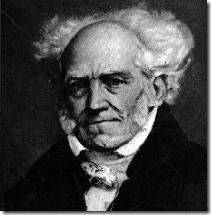
Once Arthur Schopenhauer was visiting a famous green house in Dresden, Germany. He was captivated by a particular plant and spent an unusual amount of time studying it. The curator of the house, taking him for a biologist asked him - ” Sir, who are you?”
Schopenhauer slowly turned around and regarded the curator for a moment and replied "If you could only answer that question for me, I would be eternally grateful."
References IMDB for the movies and SGI for wisdom to explore the black hole around me.
1. searching for self in the fast moving world
and
2. Teresa Carreño Youth Orchestra
And if you are an Hegelian or as fucked up as I am then you’ll see the whole cycle. Humans.

Once Arthur Schopenhauer was visiting a famous green house in Dresden, Germany. He was captivated by a particular plant and spent an unusual amount of time studying it. The curator of the house, taking him for a biologist asked him - ” Sir, who are you?”
Schopenhauer slowly turned around and regarded the curator for a moment and replied "If you could only answer that question for me, I would be eternally grateful."
References IMDB for the movies and SGI for wisdom to explore the black hole around me.
Monday, March 23, 2009
Job Karma

As much as we would like to keep a nice job that matches our strength, experiences, needs, wants and interests, it is as hard as or even harder than finding an ideal soul mate. While we each have our own criteria we use while choosing our jobs, employers have their own. Even if we have temporarily secured a job, the terms and conditions of the position are ever-changing due to factors such as the business operation, the economic situation, and the environment. There are too many variables to watch and control. Almost everybody has experienced endless frustration in trying to land a steady, sound, promising and dignified job. For some, it is a tough task even to grab any job at all. The ball, seemingly, is by no means in our hand.
The wounded economy has made keeping a stable and decent job even more challenging. The job market has been affected the most, and has been drastically cut without mercy. The meager job positions available are far less than enough to go around. Tens of thousands of workers are being laid off. The luckier ones still get to keep their jobs but don’t know when it will be their turn to lose them. Facing this impact head on but helplessly and defensively, many of us have started to realize how feeble and incompetent we are when our job karma is being played out.
Our bad karma in our jobs looks so abstract and overwhelming that we seem to have no control over it. The truth is, we can treat it as a springboard to advancing in our jobs. The key is how earnestly we want to eradicate our bad job karma, transcend it and bid it good-bye for good. We absolutely hold the power, the wisdom and the means to turn this poison into medicine, because we practice Nichiren Buddhism.
A successful fishery exporter in Taiwan once shared his trial-and-error experience in exporting mackerel to Japan. His first few shipments were total disasters. Each time, all the mackerel had died en route. Knowing that mackerel were energetic and active, he had immediately increased their food supply, pumped more oxygen into the enlarged fish tanks and filled the tanks with perfectly conditioned water in preparation for the next shipment, but the improvements did not help much. Then, an experienced friend suggested that he put some catfish into the tanks with the mackerel. “Catfish are the mortal rival to mackerel. Wouldn’t they eat up all my merchandise?” he wondered.
In fact, the presence of catfish placed the mackerel on high alert, forcing them to stay in constant motion in order to quickly dart away from their predators when being attacked. Due to such life-threatening urgency, the mackerel were able to manifest enough of their potential energy to stay strong. Thus, according to the fishery exporter, most of the mackerel arrived safe and sound, except those few that were weak in body and mind, and lacking in fighting spirit.
It was a military strategy in old times to deploy troops in such a way as to leave no room to maneuver and no route for escape, so that the soldiers would fight desperately for their lives and eventually win the battle.
Don’t the above two examples demonstrate that a crisis can be our turning point to success? There’s no better time than this moment to shake up and turn our bad job karma into good. If we are out of work, our job is to get ourselves into high gear for a victorious strike back. We have all the time we need at our disposal. If we are constantly in fear of losing our jobs or feeling unhappy and depressed by our unfit jobs, we can spur ourselves into working for future promotion. Coping with it indomitably, we can use the frustration to strengthen our determination.
Buddhism teaches the law of simultaneity of cause and effect. But it is cause that triggers the birth of effect. Effect can’t come about without cause being made first. In other words, cause must precede effect. The beauty of it is that we can maneuver and reap the benefits we want by sowing the right seeds. In this case, we can and must make good causes that generate the kind of good effect or good karma that we desire.
On May 21st, 2001, President Ikeda spoke about “The Force of People Awakened”. He shared Mr. Toda’s fervent wish for the student division members:
“At the student division’s inaugural meeting, Mr. Toda said to the 500 bright young people assembled, ‘It is my wish that half of you will become company directors and the other half will earn doctorates.’ These are well-known words.”
In President Ikeda’s novel “The New Human Revolution” v. 1 p. 60, he thus encouraged Riki, the newly appointed first Young Men’s Division District Chief in Hawaii:
“Riki, to gain trust in society, it is first important to succeed on your job. That is the foundation for everything. To do so, you will naturally have to work twice as hard as those around you. You will also need to activate your wisdom by consistently chanting daimoku…
When you make kosen-rufu your life’s objective and pray to excel at your work in order to show proof of that goal’s validity, you will be opening the way for your own victory and good fortune.”
In both Presidents Toda’s and Ikeda’s minds, in order to spread Nichiren Buddhism far and wide, it is important that we succeed in our jobs to strengthen our abilities for our goal.
In this guidance, President Ikeda points out how we can open the way for our victory and good fortune:

1. Make kosen-rufu our life’s objective.
2. Pray to excel at work to show the validity of kosen-rufu.
3. Activate our wisdom by consistently chanting daimoku.
4. Work twice as hard as those around us.
Based on this guidance, here are some possible causes that we may consider to embark upon. Our goal is to become people who are free of job crises and who enjoy going to work every day to contribute as well as to receive.
Cause No. 1: Set a master goal that contributes to achieving kosen rufu.
During our everyday chanting is the perfect time to seek wisdom and ponder the specific details of our career goals. We become what we think about.
What do we desire to achieve in life? What do we expect from our jobs? How much money will we be happy making? What effort do we have to put forth to earn it? We incorporate our desires and dreams and the corresponding responsibilities into our goals. The ultimate purpose for those goals is to pave the way for our mission of spreading Nichiren Buddhism: to accumulate fortune, to create actual proof, to strengthen our abilities and to gain trust in the society.
Our goals also include developing ourselves in order to advance no matter what our duty is at work. Everyone starts at the bottom on the way up. No job is too small, no position is too low and no field is too insignificant. One may distinguish oneself in any trade. Opportunities exist everywhere. The plan is a lifelong one, not just for now. We have to think like entrepreneurs, not employees; like value-creators, not labor-providers. Because of the simultaneity of cause and effect, our quality thinking is the perfect cause with which to nourish our lives.
Do we already know all there is to know about our jobs? Can we fill the demands of our jobs? Are there better ways to do what we are currently doing? We want to train and educate ourselves so that we are highly skilled and badly needed and appreciated. We want to become people who can’t be replaced or who the employers will let go only when they have to shut down the entire operation.
All companies are constantly on the lookout for capable leaders on every level. We would like to polish and develop ourselves to the extent that we are obviously over-qualified for our position. If it is so obvious, they will see it and make the appropriate position adjustments to let the companies benefit from our ability. We want to become people who are constantly approached by recruiters with better and better job offers, even if we already have good jobs.
We desire our abilities to allow us to be recession-proof, withstand the stormy economy and never have to drift along in the currents among the multitudes. Knowing that we excel in our field, we enjoy going to work, setting a great example and inspiring others.
Are such goals too optimistic and ambitious to reach? Not at all. Our chanting of daimoku is like the roar of the lion and our practice like the mighty sword. With them, we will succeed dauntlessly in every endeavor for the execution and completion of our plan.
Cause No. 2: Chant abundant daimoku, praying to excel at work.
The best cause we can make to crack down on our bad job karma is to chant hours and hours, as much as possible, everyday. As practitioners of Nichiren Buddhism, we all know that with chanting, we can activate wisdom, accumulate fortune, elevate our life condition, expand our capacity and obtain protection and opportunities from the Buddhist Gods. The Buddhist gods (shoten zenjin) manifest themselves as ordinary
people who come to our aid at the right time in the right place.
Through chanting, we are also able to communicate compassionately with other people’s Buddhahood, including those we associate with at work. The benefits of our massive and steadfast chanting, accompanied with our penetrating prayer, move us toward our goals.
“Gohonzon, I have realized that only under such a dire job market situation can I show true and convincing actual proof by, against all odds, finding a job that fits me well. I am determined to land one no matter what. This is the perfect opportunity to forge myself into someone capable of fulfilling my mission. I am very excited about it!
“Gohonzon, I am chanting to activate my wisdom to enable myself to see a clear picture of how to change my job karma. I am chanting so that my life force is so strong that I can staunchly complete a grand task of human revolution. Gohonzon, I am taking every action that I can possibly take to prove how deathly serious I am about creating good karma in my career. I know my destiny is in my own hands.
“Gohonzon, every day, just as I am using my whole being to send daimoku out to the whole universe, I am sending my resume out to the world. Through every channel of cyberspace and to every corner of the universe, they will definitely reach my friends and previous co-workers who know my abilities. Those acquaintances will watch for job openings for me and recommend me to their companies. My prayer will also make my resume stand out in the eyes and minds of companies that need my service and can benefit from my work.
“Gohonzon, I know the job market has shrunk considerably. However, as long as it has not been totally extinguished, I am determined to work twice as hard and make myself qualify for a share of it. I am so confident because I uphold this faith and practice it earnestly, because I am nourished by the encouragement and support of my fellow SGI members and my family and friends, and because my mission requires my victory to be a vanguard on the long path that lies in front of me. Gohonzon, Watch me! Though it is very difficult, I am making it happen!”
Cause No. 3: Activate and exercise our wisdom through chanting.
It is recommended that we keep a note pad and a pen besides us to write down the wisdom emerging from our chanting. Hours of focused chanting every day will produce wisdom that rewrites our destiny hereafter, when put into action.
We need to show interest in, enjoy and appreciate our job no matter how lousy we think the job is. Since we engage at least one third of each day in the job, we must find a way to make the job our servant instead of our tyrant. Without changing the reality of our unfulfilling job, we can turn around and let the same job work for us. We don’t allow the job to drain our energy. We command it to nourish our strength in preparation for our further advancement.
To do so, we first have to put aside all our feelings of dislike or hate of our job. Then, by compassionately not taking for granted what we are already getting from it, it won’t be difficult to feel the appreciation. It is usually the case that as human beings, we would make every effort to avoid pain and pursue pleasure. Complaint erases fortune and creates negative effect, while appreciation accrues blessing. Therefore, it is quite clear that our efforts should be focused strictly on not complaint but on appreciation.
Isn’t it true that most jobs support our living, holidays and health insurance? What other benefits do they provide? Is the environment clean and comfortable? Do our colleagues open a course of human revolution for us to learn, to polish our skills, and to become better human beings? Are we generously given access, time, help and freedom to learn the finer points, insights and secrets of the trade? Isn’t this the perfect setup from which to master our trade, pushing us to climb the next rung of the career ladder?
If we could objectively put ourselves in our employers’ shoes, we wouldn’t need much wisdom to realize what we could do to be cherished and promoted. Our company can afford to treat us generously only when it thrives and prospers. The cause we have to make for our own sake is to help it, to the best of our ability, succeed against the tough competition. Every employee’s effort counts. But there’s no limitation to how we can make good causes. What’s the maximum extent to which we can offer and contribute? How can we incorporate our strengths to make our work generate more value than ever, without increasing cost? What is our niche that will let us stand out from the common practice in the field? How can we observe our job with a new eye and detect the clues to revamp it or give it a new twist? Abundant daimoku will trigger the light bulb in our brain to shine brightly. The rest is the story of the wonderful work of wisdom.
Simply by setting our minds on those goals, we have registered eloquently in our lives all the extra good causes of thoughts and their simultaneous effects. When we obtain results, which we definitely will, they will stand out on our resume. By putting forth such efforts, we may have at the same time benefited others due to the side effects of our great good causes. But it is guaranteed that 100 percent of the effect or fortune, original and genuine, will flow into our very own lives.
Let’s use a female receptionist as an example to practice how we can add essence and aroma to her job description.
She has to be serious about her job and be willing to perform it at her best, as an art. She then chants to manifest her Buddha nature at work. The benefits of chanting Nam-myoho-renge-kyo, the Lotus Sutra, will purify her six sense organs. Her voice is one of her major means to conduct her job, and that voice does the Buddha’s work. She is being given countless opportunities each day to use her voice to greet every caller! The callers won’t see her facial expression, but they will definitely feel her Bodhisattva compassion through her voice.
She is usually the first contact for every colleague and visitor who comes to the office. Facing them, she can apply the Buddhist teaching and bow to their Buddhahood, show them her respect and treat everyone as the most important person on earth. She can also carry a high life condition with her to inject compassion and happiness into the lives of people she comes in contact with. Can she thus turn her reception hall into a Buddha Land and lift those people to a higher life state? You bet!
By being uplifting in order to fulfill her job duties beautifully, will she feel the same joy herself? Will the environment and the universe respond to her in kind? Of course! What she puts out is what she receives. And you never know, somewhere, someone might be so impressed by her performance that they might feel inclined to promote her!
However, even with such wisdom in our pursuit for excellence, it would still be a great challenge to revolutionize our routine work and habitual thinking if we don’t work on our inner transformation first. As practitioners of Nichiren Buddhism, we surely have the advantages and means to accomplish this cause that will pave the way for the ultimate fulfillment of our goal.
Cause No. 4: Embark on our project of human revolution.
It seems that we can’t escape from doing human revolution if we want to reroute the course of our unhappy lives. Every aspect of our lives calls for our human revolution. If we don’t ever face it head on, how can we expect to grow something different out of the same old seed that’s deeply rooted in the earth of our lives?
Our fundamental life tendency affects how we perform in our profession. Our attitude in applying our abilities accounts for our achievement at work. Do we constantly move from one job to another? Is it because of our lack of ability, efficiency or persistence? Are we dwelling in comfortable routines, making do with whatever we get and falling into the trap of inertia? Do we indulge ourselves in excessive free will, thereby sabotaging ourselves? Do we make excuses and evade our responsibility? If we see something that needs to be done but isn’t in our job description, do we tend to think: “This is not my department. That is too much for me to do.”? Are we being complacent, confining ourselves in a narrow, outdated paradigm without having an open mind and the motivation to change and to grow?
Are we loners who are over-sensitive, negative, picky, pitiful and angry? Or are we bull-headed, domineering, arrogant, vindictive, stubborn, defensive and intimidating? Can we work harmoniously with others as a team? Are we accessible and reliable, suitable to be entrusted with sensitive assignments? Are we constructive, positive, enthusiastic, energetic and eager to learn and to contribute? Are we strong and humble enough to take suggestions or criticism and to reflect and improve? Is our presence at work a pleasant asset to our colleagues and the company?
It is not a bad idea to ask or even beg our family and friends to help us identify our shortcomings and help push us to change. If necessary, pay someone or hire a professional to oversee the execution of this project. Our character is our fate, because it directs us on how to make causes. By transforming ourselves, we change what we receive from our surroundings without changing the reality of it. The completion of our human revolution will enable us to greatly increase our abilities and our performance and to become happy people who enjoy everything we do and embrace everyone we meet.
A Women Division member, in whose life devilish functions ran rampant, struggled in every aspect of her life of 48 years. As a consequence of unrelenting childhood abuse, she became very toxic, attracting confrontations and abuse everywhere. As a flight attendant her work was a nightmare. Colleagues harassed and abused her on every trip. Even strangers treated her meanly, not to mention her family. She was always furious and self-pitying. In 21 years of chanting, she saw little improvement. Unknown to her, her attitude while chanting was fearful and negating, wishing for relief but still believing she deserved to be punished. Her interaction with society never failed to bring forth the Pavlovian dynamic, reinforcing her negativity towards herself, which the toxic environment happily responded to. It was a vicious, vicious circle.
All the guidance from leaders all over the world failed to give more than temporary relief. When others didn’t abuse her, she abused herself. She would stop eating completely and turn to alcohol and cigarettes. Her frustration with herself only increased.
It was not until she fully awakened to the significance of human revolution and resolutely worked on it did her life take a dramatic, sharp turn. Nine months after she started her inner transformation, she is now enjoying the excitement of being totally embraced, complimented and greeted by everyone, (including colleagues who had abused her every time they flew together) as if she were a long lost sister. They even constantly share their problems with her and let her introduce them to Nichiren Buddhism. A colleague based in Los Angeles just received Gohonzon two months ago.
Her sister in Iceland, to whom she hadn’t spoken in years, called her out of the blue and announced that she and her Icelandic husband were waking up every morning at six to kneel on the floor, face east and chant. Her sister wanted to be connected to the SGI-Iceland.
Her life has changed totally, and her environment reflects it. In an email to me she marveled, “I cannot believe that I have lived my entire life in utter hell when within my grasp there existed true happiness.” In her own words, she “became happy in spite of herself.”
With all the preparations, now we are ready to make:
Cause No. 5: Take actions upon actions.
Now, we can organize the notes we take down during our chanting, and put the action items that will move us steadily ahead toward our goals in the order of their importance.
By diligently carrying out faith, practice and study, the three pillars of Nichiren Buddhism, we have learned to set our mind to bringing our strength into full play despite our status and position. We are able to polish our lives to become active, optimistic and happy, and thus shine and attract positive energy and opportunities.
The Buddhist teaching of indefinitely progressing can also forge us into people whose lives brim over with dignity, charisma and achievement.
To enhance our ability for advancement, we research the nature, the content and the technique of our line of business, read books and study our specialty and ask the opinions and experiences of seniors and experts in the field.
An SGI-USA Young Men’s Division member embarked on a new career with a pay cut. He had to go through a two-year trial or training period. Challenging his lazy nature and fear of hard work, he took a very painstaking process to slowly but steadily build up his experience and clientele. At the same time, he became friendly with a senior in the office and constantly sought his advice.
After two years, just before his graduation from the training program, the senior asked him to become his partner. He was planning to retire in a couple of years and asked this young man to take over a book of clients that would take anyone decades to build. This young man’s training from our Buddhist practice won him the trust of the senior, and also had enabled him to change his financial situation. (For details, please see Experience by David Tempest, World Tribune 12/22/2000)
It is also important that we follow a good work ethic and abide by regulations and the job schedule, even if no one is watching us. In fact, we really can’t afford not to watch ourselves, because every move creates new causes in our lives. A good cause produces good effects; a bad cause, bad effects; no cause, no effects. Let’s check it out:
“The Buddha taught that one, from the very moment of one’s birth, is accompanied by two messengers, Same Birth and Same Name, who are sent by heaven and who follow one as closely as one’s own shadow, never parting from one even for an instant. These two take turns ascending to heaven to report one’s offenses and good deeds, both great and small, without overlooking the slightest detail.”
-- The Gods Same Birth and Same Name, Nichiren Daishonin, WND p 316
Our everyday actions train us to qualify for opportunities and enable us to grab them when they knock. As we grow, it will come naturally that our position and income be promoted and increased. Since we are now so solidly competent, if one offer can’t match our quality, there are plenty of other places that can and will embrace and cherish us. Just as we strive hard to succeed, every business is also putting out a long-range antenna to detect, discover and recruit people who can contribute the most to helping it succeed.
The 21st century is the age of evolution, of non-stop improvement and advancement of the cutting edge. Things are ever newer day by day. People move at lightening speed to advance so that they can rise above the crowd. We can’t preserve, stop or hold back time. The only thing we can do is to also move rapidly to at least keep up with the world. Otherwise, when times get rough, we will be washed away by the competition.
Yes, we are tired after eight-hour’s battle at work; the battle against stress and pressure. After work, we deserve a break, watching TV or hanging out and having fun with friends. While relaxing regularly, let’s listen to what Nichiren Daishonin has to say: “You survived because you still have both good fortune and rewards.” He also warns us: “When one comes to the end of one’s good fortune, no strategy whatsoever avails. When one’s karmic rewards are exhausted, even one’s retainers no longer follow one.” (WND, p 1000)
Besides spending eight hours on work and eight on sleep, we still have another eight at our disposal, but no more than that. Do we casually and unmindfully let them slip away without a trace? Or do we scrupulously manage them to add more good fortune to the savings account of our lives that we are consuming day after day? Of course it depends on what the meaning, value and purpose of our lives are. Everyone’s priorities vary.
The secrets and shortcuts to success have long become public knowledge: work diligently, wisely and persistently. Luckily, as practitioners of Nichiren Buddhism, we hold the key to the gate on the path to claiming victory and fortune. This practice saves us from stumbling around, as long as we practice it earnestly and correctly.
We can foresee the trouble and hassles we have to go through in order to carry out this complicated plan of changing our job karma. For some, it might be such a pain-in-the-neck that it is not what they would enjoy pursuing. However, there’s only one other option left for our lives: to endure and suffer the misery of being ensnared by the web of our job karma, with no escape in sight. Either way, there’s a considerable degree of pain and energy involved. It is such a tough decision to make. But we know how to chant about it to find our best answer, don’t we?
Sunday, November 23, 2008
The Life Between Spaces
Inch by Inch when you keep your life there are always spaces that creeps in. Well this realization happened in one of the parties here. Next morning when we woke up there were moments of pauses in the memories. Life did happen in those spaces.. The life between spaces
I... ME...MYSELF.....
God: Hello called me.
I, Me, Myself: Called u? No, who is this?
G: This is God. I heard your prayers. So I thought I will chat with u.
IMM: Sure, I pray. Just makes me feel good. Actually, am busy now. In the midst of something u know.
G: What r u busy with? Ants r busy too.
IMM: Don't know. But I can't find free time. Life has Become hectic. Its rush hour all the time.
G: Sure. Activity gets you busy. But productivity gets u results. Activity consumes time. Productivity frees it.
IMM: But I still cant figure it out. By the way, I was not expecting YOU to buzz me on instant messaging chat.
G: well I wanted to help u resolve your fight for time giving you Some clarity. I wanted to reach you through the medium you are comfortable with.
IMM: Tell me why has life become so complicated?
G: Stop analyzing life. Just live it. Analysis is what makes it complicated
IMM : why are we constantly unhappy ?
G: Your today is the tomorrow that you worried about yesterday. You are worrying because the act of worrying has become a habit. That's why you are so unhappy.
IMM: But how can we not worry when there is so much uncertainty?
G: Uncertainty is inevitable, but worrying is optional
IMM:But then there is so much pain due to uncertainty.
G: Pain is inevitable, but suffering is optional
IMM: If suffering is optional, why do good people always suffer?
G: Diamonds cannot be polished without friction. Gold without fire. Good people go through trials. With that experience their life becomes better not bitter.
IMM: YOU mean to say such experience is useful?
G: yes experience is a hard teacher though . she gives the test first and the lessons afterwards.
IMM: But still why should we go to through such tests? Why can't we be free from problems?
G: Problems are purposeful road blocks offering beneficial lessons to enhance mental strength. Inner strength comes from struggle & endurance, not when you are free from problems.
IMM: Frankly in the midst of so many problems we don't know where we are heading.
G: if you look outside you will not know where you are heading. Look inside. Looking outside, you dream. Looking inside, you awaken. Eyes provide sight. Heart provides insight.
IMM: Sometimes not succeeding fast seems to hurt more than moving in the right direction.
G: SUCCESS IS RELATIVE, quantified by others. Satisfaction is absolute, quantified by you. Knowing the road ahead is more satisfying than knowing you rode ahead.
IMM: Sometimes I ask, who am I, why am I here? I don't know the answers.
G: Seek not to find who you are, but to determine who you want to be. Stop looking for a purpose as to why you are here. Create it . life is not a process of discovery but a process of creation.
IMM: how can I get the best out of life
G: face your past without regret. Handle your present with confidence. Prepare for the future without fear.
IMM: SOMETIMES MY PRAYERS ARE NOT ANSWERED?
G: THERE ARE NO UNANSWERED PRAYERS . AT TIMES THE ANSWER IS no.
IMM: Thank you for this wonderful chat . I'll try to be less fearful.
G: Keep the faith & drop fear. Life is a mystery to solve, not a problem to resolve. Life is wonderful if you know how to live.
Subscribe to:
Posts (Atom)